

Hey there! As a supplier of Wound Tube Gasifiers, I often get asked about the gas production rate of these nifty machines. So, I thought I'd take a deep dive into this topic and share everything you need to know.
First off, let's understand what a Wound Tube Gasifier is. It's a type of gasifier that uses a wound tube design to convert solid biomass or other carbonaceous materials into combustible gas. This gas, often called syngas, can be used for various applications, like generating electricity, heating, or as a feedstock for chemical processes.
The gas production rate of a Wound Tube Gasifier isn't a one - size - fits - all number. It depends on several factors. One of the most crucial factors is the type of feedstock. Different biomass materials have different energy densities, moisture contents, and chemical compositions. For example, dry wood chips will have a different gas production rate compared to wet agricultural waste. Dry feedstocks generally produce more gas because less energy is wasted on evaporating the moisture.

Another important factor is the size and design of the gasifier. Larger Wound Tube Gasifiers typically have a higher gas production capacity. The design of the tube winding, the air or oxygen supply system, and the temperature control mechanisms all play a role. A well - designed gasifier with efficient heat transfer and proper air distribution can achieve a higher gas production rate.
The operating conditions also matter a great deal. The temperature inside the gasifier is a key parameter. Higher temperatures usually lead to more complete gasification and a higher gas production rate. However, there's a balance to strike because extremely high temperatures can cause issues like slagging and equipment damage. The flow rate of the feedstock and the air or oxygen injected into the gasifier also affect the gas production. If the feedstock is fed too quickly, it might not be fully gasified, leading to lower gas yields.
Let's talk about some typical gas production rates. In small - scale Wound Tube Gasifiers used for domestic heating or small - scale power generation, the gas production rate can range from a few cubic meters per hour to around 10 - 20 cubic meters per hour. These are often designed to handle a few kilograms of feedstock per hour.
For medium - scale industrial applications, the gas production rate can go up to 100 - 200 cubic meters per hour. These gasifiers are used in factories, small - scale industries, or for powering small communities.
Large - scale Wound Tube Gasifiers used in major industrial plants or large - scale power generation facilities can produce several hundred to thousands of cubic meters of gas per hour. These are designed to handle tons of feedstock daily.
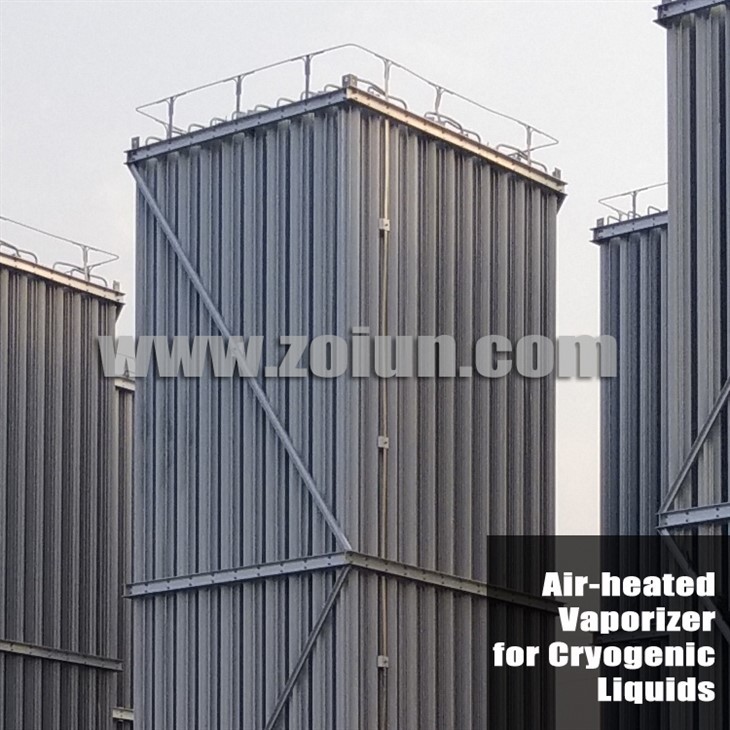
Now, I'd like to mention some related products that might be of interest to you. If you're in the market for vaporizers, we also have a range of options. Check out our High Pressure Ambient LNG Vaporizers, Low Pressure Cryogenic Vaporizers, and High - Pressure Vaporizers. These vaporizers work hand - in - hand with gasifiers in many industrial processes.
If you're looking to purchase a Wound Tube Gasifier, it's essential to consider your specific requirements. Think about the amount of gas you need, the type of feedstock you have available, and your budget. We can help you choose the right gasifier for your needs. Our team of experts has years of experience in the field and can provide you with customized solutions.
Whether you're a small business owner looking for an alternative energy source or a large industrial corporation aiming to reduce your carbon footprint, our Wound Tube Gasifiers can be a great option. We offer high - quality products that are built to last and are designed for efficient gas production.
If you're interested in learning more or discussing a potential purchase, don't hesitate to reach out. We're here to answer all your questions and guide you through the process. Let's work together to find the best gasification solution for you.
In conclusion, the gas production rate of a Wound Tube Gasifier is a complex function of multiple factors. By understanding these factors and choosing the right gasifier for your needs, you can achieve an optimal gas production rate and get the most out of your investment.
References
- Gasification Technology Council, "Principles of Biomass Gasification"
- International Energy Agency, "Biomass Gasification for Power Generation"


