Products

Cryogenic Liquid Reciprocating Pump
The key core components of our cryogenic reciprocating pumps, such as pistons, cylinders, and seals, are sourced from highly reliable manufacturers who are leaders in the industry. They provide high precision, high-quality components that also offer competitive pricing. The pump design complies with relevant mechanical manufacturing standards and specifications. Moreover, the materials used reflect our years of accumulated technical expertise in the industry, enhancing the reliability and durability of our products during operation.
Send Inquiry
Product Introduction
1. Overview of Cryogenic Liquid Reciprocating Pump
A cryogenic reciprocating pump is a type of piston pump. It operates by driving the piston back and forth within a cylinder using an electric motor. This reciprocating motion allows the pump to alternately draw in and discharge liquid, thereby achieving two main functions: fluid transfer and pressure boosting. Similar to an automobile engine, the pump cycles between intake and compression, but in this case, it handles liquids at temperatures well below minus 100 degrees Celsius, unlike a car engine which deals with gasoline.
Therefore, the working pressure and flow rate are the two most critical indicators for cryogenic reciprocating pumps. Other specifications, such as piston size, transmission box size, and motor speed, are merely technical pathways to achieve these two functions. Depending on different operating conditions, the pressure can range from 0.1 MPa to 100 MPa, and the flow rate can vary from 50 liters per hour to 10,000 liters per hour. Hence, different customers have diverse requirements for pressure and flow rate, and we can customize our pumps accordingly to meet these needs.
2. Applications of Cryogenic Liquid Reciprocating Pump
Cryogenic reciprocating pumps are utilized in L-CNG refueling stations for natural gas, catering to vehicles such as taxis and small cars. Additionally, they find application in gas filling stations, primarily for filling industrial gas cylinders such as oxygen, argon, carbon dioxide, and in steel plants as part of the furnace gas supply system.
Technical Example: Cryogenic Liquid Reciprocating Pump for Gas Filling Station
- Model: ZFG-200-450-150
- Inlet Pressure: 0.1-17 bar
- Discharge Pressure:150bar (15MPa)
- Power:380V 50Hz 3-PH 7.5KW
- Speed Control: VF Control
- Leads Time: 10-15 days
- Packaging: Wooden Crate
- Fluids: Liquid N2 / O2 / Ar
- Warranty: 12 Months
- Flow Capacity: 200-450 liter per hour
3. Main Components of Cryogenic Liquid Reciprocating Pump
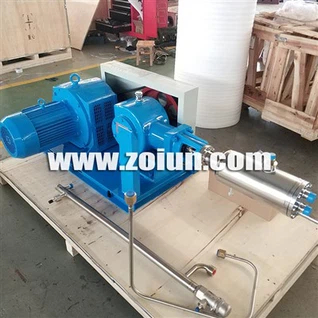
a, Cold End: The cold end is the most critical component of a cryogenic liquid reciprocating pump, comprising the piston, cylinder, and suction and discharge valve assembly. Cryogenic liquids flow through it, and to prevent excessive vaporization, the pump head is specially designed with a vacuum insulation layer. The effectiveness of this insulation layer is also a key technical indicator of the pump head's performance.
b, Transmission Case: The transmission box is essentially a gear reduction device. It is necessary because the motor operates at a high speed, and the transmission box reduces the speed of the piston. This reduction is crucial to prevent wear and tear on the piston and cylinder and ensure the safety of the liquid entering the cylinder, such as oxygen. Additionally, the transmission box serves as a buffer to absorb the impact from the motor and pressure. Therefore, it must balance these functions. Imagine the forces the transmission box must withstand in a liquid hydrogen reciprocating pump operating at 100 MPa.
c, Motor: The motor plays a crucial role in a reciprocating pump. It provides the mechanical power necessary to drive the piston back and forth within the cylinder. This reciprocating motion enables the pump to draw in and expel fluid, thereby facilitating fluid transfer or pressurization tasks. The motor's speed and torque capabilities are critical in determining the operational efficiency and effectiveness of the pump in various applications, whether it's for cryogenic liquids, industrial gases, or other fluids. Additionally, the motor must be robust enough to withstand the operational pressures and environmental conditions of the pump's application, ensuring reliable performance over extended periods.
4. Project Reference

Hot Tags: cryogenic liquid reciprocating pump, China cryogenic liquid reciprocating pump manufacturers, suppliers, factory, Wound Tube Gasifier, CNG Pressure Relief Pry, Check Valve, 500NM3 H 165BAR Ambient Air Vaporizer China Manufacturer, Safety Valve, Jacketed Heat Exchanger
Previous:
Cryogenic Piston Pump
Send Inquiry