

Leading Valve Supplier
Zoiun Fluid & Gas Equipment Co., Ltd. was founded in 2016, a high-tech company specialized in designing and manufacturing valve for the storage, transport, pressurization, and vaporization of cryo liquids and gases. Our core products include various types of cryogenic pumps and vaporizers, as well as pressure vessels such as cryogenic liquid cylinders, cryogenic tanks and micro-bulk tanks.
-
![Micro-opening Safety Valve]()
Micro-opening Safety Valve
Micro-opening safety valve finds its application in the safety discharge system of cryogenic liquid storage and transportation equipment. It exhibits characteristics such as sensitive switching andAdd to Inquiry -
![Cryogenic Safety Valve]()
Cryogenic Safety Valve
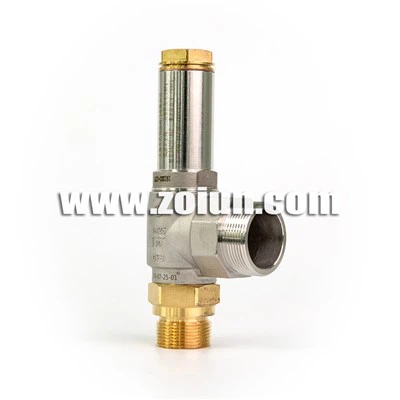
Safety Relief Valves are devices primarily designed for low-temperature applications.The manufacturing materials for Safety Relief Valves include stainless steel, brass, and bronze.These valves areAdd to Inquiry -
![Cryogenic Globe Valve]()
Cryogenic Globe Valve
Embrace the Cryogenic Globe Valve and elevate your cryogenic applications to unparalleled levels of precision, efficiency, and safety. Designed to handle a wide range of media in extreme temperaturesAdd to Inquiry -
![CNG High Pressure Safety Valve]()
CNG High Pressure Safety Valve
A CNG High Pressure Safety Valve is a critical component in CNG systems to maintain safe pressure levels and protect equipment and personnel from potential hazards due to excessive pressure buildup.Add to Inquiry -
![Pressure Relief Valve]()
Pressure Relief Valve
Pressure relief valves are primarily employed in cryogenic equipment, pipelines, tanks, and tank cars, serving as the ultimate protection devices for pressure vessels.Add to Inquiry -
![Cryogenic Pressure Relief Valve]()
Cryogenic Pressure Relief Valve
Zoiun Fluid & Gas is a highly competitive company supplying comprehensive low-temperature equipment solutions. Our pressure relief valves are a crucial component, ensuring stable pressure control forAdd to Inquiry -
![Cryogenic Micro Pressure Relief Valve]()
Cryogenic Micro Pressure Relief Valve
Zoiun Fluid & Gas, the cryogenic industrial solotion expert in offering the entire cryogenic chain products, give it check on our cryogenic valves to find out a good control on the fluid and gas.Add to Inquiry -
![Check Valve]()
Check Valve
Check valve, also known as check valve or check valve, its function is to ensure that the medium in the pipeline directional flow without backflow function. Check valves are automatic valves.Add to Inquiry -
![Cryogenic Stop Valve]()
Cryogenic Stop Valve
Low temperature globe valve refers to the valve whose closing parts (disc) move along the center line of the seat. According to this form of movement of the valve disc, the change of the valve seatAdd to Inquiry -
![Emergency Shut-off Valve]()
Emergency Shut-off Valve
Emergency cut-off valve, also known as safety cut-off valve, means that in the event of an emergency, the valve will be quickly closed or opened to avoid the occurrence of accidents.Add to Inquiry -
![Safety Valve]()
Safety Valve
Safety valve is a kind of safety protection valve, its opening and closing parts under the action of external force in the normally closed state, when the medium pressure in the equipment or pipelineAdd to Inquiry



Why Choose Us
Strict Quality Control
We implement a multi-level quality management system, meticulously overseeing every step from raw material procurement to the production process, ensuring that every piece of equipment meets the highest standards.
Global Sales
Our products are highly popular and are sold to many countries and regions worldwide. We also provide one-stop equipment solutions, which do not require on-site construction and reduce time costs.
Get Discount on Bulk Orders
We also provide further discounts for large quantity orders. In the event that you cannot find the cryogenic equipment you need on our website, we are more than happy to source promotional pricing through our sister companies to ensure that your needs are met.
Custom Services
Our products are highly flexible and can be custom-made to meet specific customer requirements. This allows us to continuously update and expand our product line, ensuring we can meet a wide range of needs and provide tailored solutions for our clients.
Types of Valve
Micro-opening Safety Valve
Micro-opening safety valve finds its application in the safety discharge system of cryogenic liquid storage and transportation equipment.
Cryogenic Safety Valve
Safety Relief Valves are devices primarily designed for low-temperature applications. The manufacturing materials for Safety Relief Valves include stainless steel, brass, and bronze.
Cryogenic Globe Valve
Embrace the Cryogenic Globe Valve and elevate your cryogenic applications to unparalleled levels of precision, efficiency, and safety.
CNG High Pressure Safety Valve
A CNG High Pressure Safety Valve is a critical component in CNG systems to maintain safe pressure levels and protect equipment and personnel from potential hazards due to excessive pressure buildup.
Pressure Relief Valve
Pressure relief valves are primarily employed in cryogenic equipment, pipelines, tanks, and tank cars, serving as the ultimate protection devices for pressure vessels.
Check Valve
Check valve, also known as check valve or check valve, its function is to ensure that the medium in the pipeline directional flow without backflow function.
|
Product Name |
Cryogenic Safety Valve |
|
Type |
Safety Valves, Adjustable Relief Valves |
|
Place of Origin |
China |
|
Model Number |
DA22F-40P (20B1) |
|
Application |
General |
|
Temperature of Media |
Cryogenic Temperature |
|
Power |
Hydraulic |
|
Media |
Gas |
|
Structure |
Safety |
|
PN (Nominal Pressure) |
4.0 MPa (580 psi) |
|
Design Temperature |
-196°C to +80°C (-320°F to +176°F) |
|
Media |
LNG, LN2, LO2, LAr, CO2 |
|
Body Material |
CF8 |
|
Spring Material |
S30210 |
|
Main Sealing Material |
PTFE+C |
|
Net Weight |
0.8 kg |
The Series of Cryogenic Safety Valve

Advantages of Cryogenic Safety Valve

Reliable Pressure Relief
Cryogenic safety valves provide a reliable means of relieving excess pressure in a system, preventing potential catastrophic failures due to overpressure.

Adjustability
Many cryogenic safety valves allow for the adjustment of the set pressure, providing flexibility to meet the specific pressure relief requirements of different systems.

Reliable Performance in Extreme Conditions
These valves are engineered to perform effectively at cryogenic temperatures, making them ideal for use in industries handling liquefied gases like LNG (Liquefied Natural Gas) and liquid nitrogen.

Durability
Made from materials that can withstand extreme temperatures and pressures, cryogenic safety valves are durable and long-lasting, ensuring consistent and reliable service over time.
Application of Cryogenic Safety Valve
Oil And Gas Industry: In the oil and gas industry, cryogenic safety valves serve in the control of liquefaction gasses such as liquid nitrogen, methane, and helium.
Chemical And Petrochemical Industry: In the chemical processing industry, several products, including liquid oxygen, ethylene, and liquid nitrogen, require handling at very low temperatures. Cryogenic safety valves are the ideal option for this use.
Air Separation: Several pressure techniques are used to separate the various gases in the air. These plants make excellent use of cryogenic safety valves.
Food And Beverage Industry: Cryogenic safety valves are widely used in factories that produce processed food and drinks. Using cryogenic pipes and valves, these things are moved into and out of freezers.
Health Industry: Cryogenic safety valve applications are constantly growing and are even used in the medical sector—both storage areas where medical equipment is kept and pipelines that transfer gases like oxygen contain them.

Our Cryogenic Safety Valve Inspection Report
We will issue an inspection report like this before all orders ship. The basic inspection steps include a visual examination, dimension check, witnessing test, painting check, packaging check, then issuing the finished test report. We can also carry out special tests according to customer requirements.
|
Nominal Pressure |
4.0 Megapascals (MPa) |
|
Design Temperature Range |
-196°C to +60°C |
|
Suitable Media |
LNG (Liquefied Natural Gas), LO2 (Liquid Oxygen), LN2 (Liquid Nitrogen), LAr (Liquid Argon) |
|
Body Material |
HPb59-1 |
|
Spring Material |
S30210 |
|
Main Sealing Material |
PCTFE |
Benefits of Pressure Relief Valve
Enhances safety
Pressure relief valves were invented as a result of boilers exploding when they were not properly monitored. Thus, they are an easy and effective way to keep your system safe.
Increases efficiency
Pressure relief valves automatically reclose when the pressure lowers to the set level, preventing excess loss of expensive gases from the system.
Protects system components
By regulating the pressure in your system, pressure relief valves protect downstream components from damage that might otherwise result from pressure pulses.
Reliability
Pressure relief valves are designed and tested to provide reliable and consistent performance over various operating conditions.
Cost-Effective
Pressure relief valves can prevent costly damage or downtime from overpressure situations, leading to cost savings and increased efficiency.
Versatility
Pressure relief valves are available in a wide range of sizes, designs, and materials, making them suitable for use in a variety of applications and industries.
|
HVAC Systems: Pressure relief valves are critical components in HVAC (Heating, Ventilation, and Air Conditioning) systems. They help regulate and control the pressure within HVAC equipment such as chillers, boilers, and piping systems. |
|
Steam Boilers: Pressure relief valves are crucial in steam boiler systems to prevent excessive pressure buildup that can lead to explosions or equipment failure. |
|
Fuel Tanks: Pressure relief valves are commonly used in fuel storage tanks to prevent tank rupture or damage caused by pressure fluctuations, ensuring the integrity and safety of the fuel storage system. |
|
Piping Systems: PRVs are installed in piping systems to safeguard against pressure surges or blockages. |
|
Hydraulic Systems: Pressure relief valves ensure the safe and controlled operation of hydraulic cylinders, pumps, and other components by releasing excessive fluid pressure. |
|
Compressed Air Systems: PRVs are used in compressed air systems to prevent the buildup of excessive pressure that can lead to damaged equipment or leaks. |
|
Chemical Processing: PRVs are essential in chemical processing plants to protect vessels, reactors, and pipelines from overpressure situations caused by chemical reactions or process upsets. |
|
Refining Industry: Pressure relief valves are commonly used in refining operations to protect equipment such as distillation columns, heat exchangers, and storage tanks. |
|
Water Supply Systems: PRVs are used in water supply systems to regulate and maintain optimal water pressure, protect pipes and fixtures from damage due to excessive pressure, and help prevent bursts or leaks. |
|
Refrigeration Systems: Pressure relief valves are used to protect against overpressure situations that can occur due to factors such as temperature fluctuations or system malfunctions. |
Pressure relief valves need to be mounted in an upright, vertical position.
Take care not to over tighten the valve as this could cause damage or leakage.
When fitting flanged relief valves, make sure the bolts are drawn down evenly.
Ensure the inlet piping does not have a smaller diameter than the valve as this could constrict the flow.
Ensure the outlet piping is larger than the size of the valve outlet to ensure flow is not restricted.
Support the outlet piping to prevent warping and leakage and ensure no excess strain will be placed on the piping in the event of thermal expansion.


You can place your order directly by phone at +86 181 5720 5136 or contact us by email at contact@zoiun.com.
Our technicians will quote according to your needs.
After everything is confirmed, we will sign a contract with you to confirm your approval of the product requirements and quality and your payment of the deposit.
After confirming and receiving the 30% advance payment, we will start mass production.
Our technicians will control the quality during the production process.
According to the delivery time, we will arrange shipment after receiving the remaining payment.
FAQ
We're well-known as one of the leading valve manufacturers and suppliers in China. Please rest assured to buy cheap valve from our factory. All custom made products are with high quality and competitive price.
Emergency Shut-off Valve, surface valve, valve component