

Can a Wound Tube Gasifier be used for co - gasification of different fuels?
As a supplier of Wound Tube Gasifiers, I've been frequently asked about the potential of these innovative devices for the co - gasification of different fuels. Co - gasification is an emerging technology that holds great promise for enhancing energy efficiency, reducing emissions, and utilizing a wider range of feedstocks. In this blog, I'll explore whether a Wound Tube Gasifier can be effectively employed for this purpose.
Understanding Co - gasification
Co - gasification involves the simultaneous gasification of two or more different fuels. These fuels can vary widely in their composition and properties, such as biomass, coal, waste plastics, and agricultural residues. The main advantage of co - gasification is that it allows for the combination of the positive characteristics of different fuels while compensating for their individual drawbacks. For example, biomass can be co - gasified with coal to reduce the carbon footprint of coal gasification and improve the overall environmental performance.
The Wound Tube Gasifier: An Overview
The Wound Tube Gasifier is a unique type of gasifier that features a wound tube design. This design provides several advantages, including high heat transfer efficiency, compact size, and excellent gas - solid contact. The wound tubes create a tortuous path for the fuel and gas, ensuring thorough mixing and efficient conversion of the fuel into syngas (a mixture of carbon monoxide, hydrogen, and other gases).

Suitability of Wound Tube Gasifiers for Co - gasification
One of the key factors in determining the suitability of a Wound Tube Gasifier for co - gasification is its ability to handle different types of fuels. The wound tube design allows for good flexibility in terms of fuel feed. The tortuous path created by the tubes ensures that even fuels with different particle sizes and physical properties can be effectively gasified.
- Fuel Compatibility
- Different fuels have different reactivity and gasification characteristics. For example, biomass typically has a higher volatile content and lower ash melting point compared to coal. A Wound Tube Gasifier can accommodate these differences by adjusting the operating conditions such as temperature, pressure, and residence time. The high heat transfer efficiency of the wound tube design helps in quickly heating up the fuel, regardless of its initial state, promoting rapid gasification.
- Moreover, the design allows for a more uniform distribution of heat within the gasifier, which is crucial when dealing with a mixture of fuels. This uniformity helps in achieving consistent gasification of all the components in the fuel blend.
- Syngas Quality
- In co - gasification, the quality of the syngas produced is of utmost importance. The syngas can be used for various applications such as power generation, chemical synthesis, and fuel production. A Wound Tube Gasifier can produce high - quality syngas during co - gasification. The efficient gas - solid contact within the wound tubes ensures complete conversion of the fuel, resulting in a syngas with a high concentration of carbon monoxide and hydrogen.
- Additionally, the design helps in minimizing the production of unwanted by - products such as tar and char. Tar can cause blockages in downstream equipment, while char represents unreacted fuel, reducing the overall efficiency of the gasification process. The Wound Tube Gasifier's ability to reduce these by - products makes it a suitable choice for co - gasification.
- Operational Flexibility
- Co - gasification often requires the ability to adjust the feed ratio of different fuels based on their availability, cost, and the desired syngas composition. A Wound Tube Gasifier offers good operational flexibility in this regard. The gasifier can be easily adjusted to handle different fuel mixtures by changing the feed rate and the operating conditions. This flexibility allows for the optimization of the gasification process to meet specific requirements.
Case Studies and Research Findings
There have been several research studies and practical applications that demonstrate the potential of Wound Tube Gasifiers for co - gasification. Some studies have shown that co - gasifying biomass with coal in a Wound Tube Gasifier can lead to a significant reduction in greenhouse gas emissions compared to coal - only gasification. The biomass contributes to a lower carbon content in the fuel blend, and the efficient gasification process in the Wound Tube Gasifier further enhances the environmental performance.
In industrial settings, companies have successfully used Wound Tube Gasifiers for co - gasifying waste plastics with biomass. This not only helps in waste management but also produces a valuable syngas that can be used for energy production. The Wound Tube Gasifier's ability to handle the complex composition of waste plastics and biomass mixtures has been a key factor in these successful applications.
Challenges and Considerations
While a Wound Tube Gasifier shows great potential for co - gasification, there are also some challenges and considerations.
- Ash Management
- Different fuels can have different ash compositions, which can lead to issues such as ash deposition and slagging within the gasifier. The ash from some fuels may have a low melting point, causing it to stick to the walls of the wound tubes and reducing the heat transfer efficiency. Proper ash management strategies, such as adjusting the operating temperature and using additives, need to be implemented to address these issues.
- Fuel Pretreatment
- To ensure optimal performance during co - gasification, some fuels may require pretreatment. For example, biomass may need to be dried and pelletized, while waste plastics may need to be shredded and sorted. The cost and complexity of fuel pretreatment need to be considered when evaluating the feasibility of co - gasification using a Wound Tube Gasifier.
Related Products
In addition to our Wound Tube Gasifiers, we also offer a range of other products that are relevant to the gasification and energy industry. Our Medium Pressure Cryogenic Vaporizers are designed to efficiently vaporize liquefied natural gas (LNG) at medium pressures. These vaporizers are essential for applications where a continuous supply of gaseous natural gas is required.

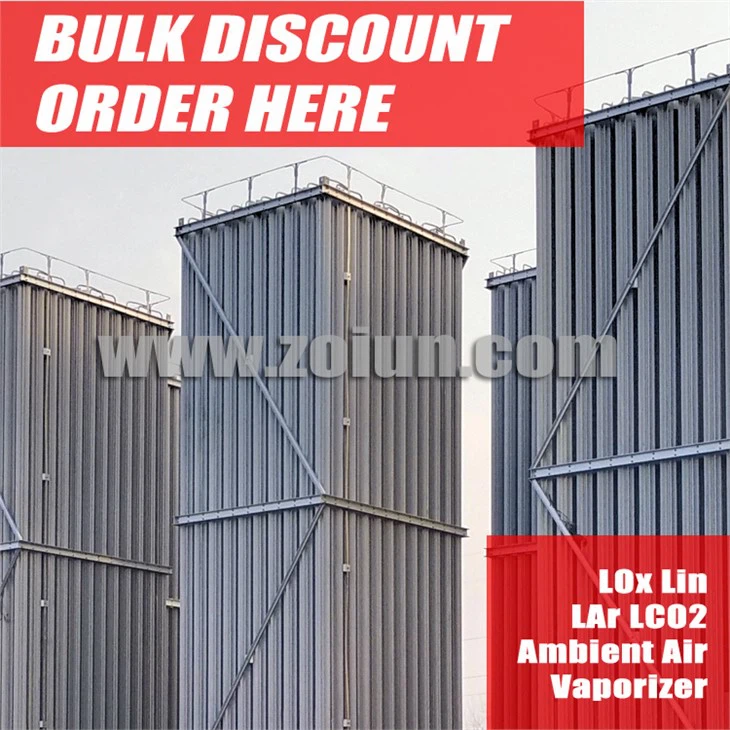
Our Ambient Air Heated Cryogenic Vaporizers utilize ambient air as a heat source to vaporize cryogenic liquids. This energy - efficient design makes them a popular choice for various industrial and commercial applications.
The Ambient Air Vaporizer For LNG is specifically tailored for the vaporization of LNG. It offers high - performance and reliability, ensuring a smooth and continuous supply of natural gas.
Conclusion
In conclusion, a Wound Tube Gasifier can indeed be used for the co - gasification of different fuels. Its unique design offers several advantages such as fuel compatibility, high - quality syngas production, and operational flexibility. However, challenges such as ash management and fuel pretreatment need to be carefully addressed. If you are interested in exploring the potential of co - gasification with a Wound Tube Gasifier or any of our related products, we invite you to contact us for further discussions and procurement opportunities. Our team of experts is ready to assist you in finding the best solutions for your energy needs.
References
- Bridgwater, A. V. (2012). Review of fast pyrolysis of biomass and product upgrading. Biomass and Bioenergy, 38, 68 - 94.
- Demirbas, A. (2004). Co - gasification of coal and biomass mixtures in air in a thermogravimetric analyzer. Fuel, 83(15), 2129 - 2133.
- Zhang, H., & Zhang, X. (2017). Co - gasification characteristics of coal and biomass in a fluidized - bed gasifier. Fuel Processing Technology, 166, 123 - 131.


