

The gas cooling process for a Wound Tube Gasifier is a crucial aspect of its overall operation, ensuring efficient and safe gas production. As a supplier of Wound Tube Gasifiers, I am well - versed in the intricacies of this process and will delve into its details in this blog.
Understanding the Wound Tube Gasifier
Before we explore the gas cooling process, it's essential to understand what a Wound Tube Gasifier is. A Wound Tube Gasifier is a type of gasification device that is commonly used in various industrial applications. It operates by converting solid or liquid fuels into a combustible gas through a thermochemical process. The wound tube design provides a large surface area for heat transfer, which enhances the gasification efficiency.
The Gasification Process
The gasification process in a Wound Tube Gasifier typically involves several steps. First, the fuel is fed into the gasifier, where it is heated in a low - oxygen environment. This causes the fuel to undergo pyrolysis, breaking down into volatile gases, char, and ash. The volatile gases then react with the remaining oxygen and steam in the gasifier to produce a combustible gas known as syngas.
However, the syngas produced at this stage is usually at a very high temperature. High - temperature syngas can cause problems such as corrosion, fouling of downstream equipment, and safety hazards. Therefore, it is necessary to cool the gas before it can be used in subsequent processes.
The Gas Cooling Process
The gas cooling process for a Wound Tube Gasifier can be divided into several stages, each with its own purpose and mechanism.
Initial Cooling
The first stage of the gas cooling process is often an initial rapid cooling step. This can be achieved through direct or indirect cooling methods. In direct cooling, a coolant such as water is sprayed directly into the hot syngas. The water evaporates, absorbing a large amount of heat from the gas and reducing its temperature quickly. This method is relatively simple and cost - effective, but it can also introduce impurities into the gas if the water is not pure.
Indirect cooling, on the other hand, uses a heat exchanger. The hot syngas passes through one side of the heat exchanger, while a coolant (such as water or a refrigerant) flows through the other side. Heat is transferred from the gas to the coolant without direct contact between them. This method is more suitable when the purity of the syngas needs to be maintained.
Intermediate Cooling
After the initial cooling, the syngas still needs further cooling to reach the desired temperature for downstream applications. Intermediate cooling can be carried out using a series of heat exchangers. These heat exchangers can be designed in different configurations, such as shell - and - tube heat exchangers or plate - type heat exchangers.
The choice of heat exchanger depends on various factors, including the flow rate of the syngas, the temperature difference between the gas and the coolant, and the available space. For example, shell - and - tube heat exchangers are suitable for high - flow applications, while plate - type heat exchangers are more compact and can provide a high heat transfer rate in a relatively small space.
Final Cooling
The final stage of the gas cooling process is to fine - tune the temperature of the syngas to the exact requirements of the downstream process. This may involve using a precision - controlled cooling system. For instance, a refrigeration - based cooling system can be used to achieve very low and stable gas temperatures.

In addition to temperature control, the final cooling stage may also include the removal of any remaining moisture or impurities from the gas. This can be done using filters, condensers, or other separation equipment.
Importance of Proper Gas Cooling
Proper gas cooling is of utmost importance for the overall performance and longevity of the Wound Tube Gasifier system.
Equipment Protection
Cooling the syngas helps to protect downstream equipment such as gas engines, turbines, and chemical reactors. High - temperature gas can cause thermal stress and corrosion in these components, leading to premature failure. By reducing the gas temperature, the risk of equipment damage is significantly reduced.
Improved Efficiency
Cooler syngas is denser, which means that more gas can be transported or stored in a given volume. This can improve the overall efficiency of the gas handling and utilization processes. Additionally, some downstream processes may require the syngas to be at a specific temperature range for optimal performance. Cooling the gas ensures that it meets these requirements.
Safety
High - temperature gases are a safety hazard. They can cause burns, fires, or explosions if they come into contact with flammable materials or are not properly contained. Cooling the syngas reduces these risks and makes the entire gasification system safer to operate.
Role of Vaporizers in the Process
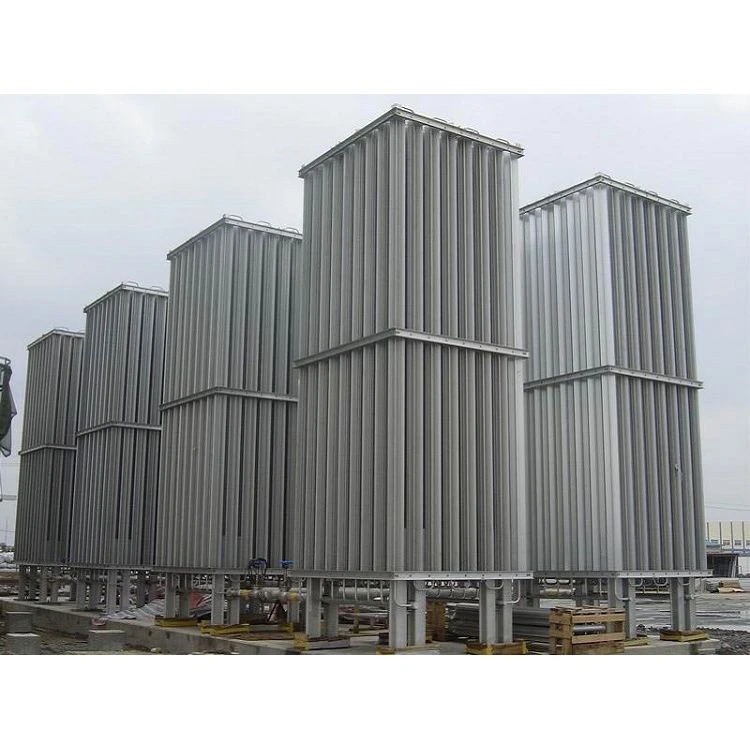
Vaporizers can play an important role in the gas cooling process of a Wound Tube Gasifier. Vaporizers are devices that convert a liquid into a gas. In the context of gas cooling, they can be used in the cooling system. For example, a cryogenic liquid such as liquid nitrogen can be used as a coolant in a vaporizer. The liquid nitrogen absorbs heat from the hot syngas as it vaporizes, effectively cooling the gas.
Cryogenic Liquid Ambient Air Vaporizer is a specific type of vaporizer that uses ambient air to vaporize the cryogenic liquid. This type of vaporizer is energy - efficient and environmentally friendly, as it does not require additional power sources for heating.
Conclusion
The gas cooling process for a Wound Tube Gasifier is a complex but essential part of the overall gasification system. It involves multiple stages of cooling, from initial rapid cooling to final precision temperature control. Proper gas cooling is crucial for protecting downstream equipment, improving efficiency, and ensuring safety.
As a supplier of Wound Tube Gasifiers, we understand the importance of providing reliable and efficient gas cooling solutions. Our products are designed to work seamlessly with different types of gas cooling systems, ensuring that our customers can obtain high - quality syngas at the right temperature for their specific applications.
If you are interested in learning more about our Wound Tube Gasifiers or the gas cooling process, or if you are considering purchasing a gasifier for your industrial needs, we invite you to contact us for a detailed discussion. Our team of experts is ready to provide you with professional advice and customized solutions.
References
- Smith, J. (2018). Gasification Technology Handbook. Elsevier.
- Brown, A. (2020). Industrial Heat Exchangers: Principles, Design, and Operation. Wiley.
- Johnson, R. (2019). Cryogenic Engineering: Principles and Applications. CRC Press.


