

Hey there! As a supplier of Tank Booster Pry, I'm super stoked to dive into the technical parameters of this awesome piece of equipment with you. Whether you're in the gas industry or just curious about these things, this blog is gonna give you the lowdown on what makes a Tank Booster Pry tick.
1. Flow Rate
One of the most crucial technical parameters of a Tank Booster Pry is its flow rate. Flow rate basically tells you how much gas the booster can move within a specific period. It's usually measured in cubic meters per hour (m³/h) or standard cubic feet per minute (SCFM).
The flow rate you need depends on your specific application. If you're dealing with a small - scale operation, a lower flow rate might be sufficient. But for large - scale industrial processes or high - demand gas distribution, you'll want a Tank Booster Pry with a high flow rate. For example, in a big manufacturing plant where gas is used for various production processes, a booster with a flow rate of 500 m³/h or more could be necessary.
2. Pressure
Pressure is another key parameter. There are two main types of pressure we talk about when it comes to a Tank Booster Pry: inlet pressure and outlet pressure.
The inlet pressure is the pressure at which the gas enters the booster. It's important to ensure that the inlet pressure is within the acceptable range specified by the manufacturer. If the inlet pressure is too low, the booster might not function properly, and if it's too high, it could cause damage to the equipment.
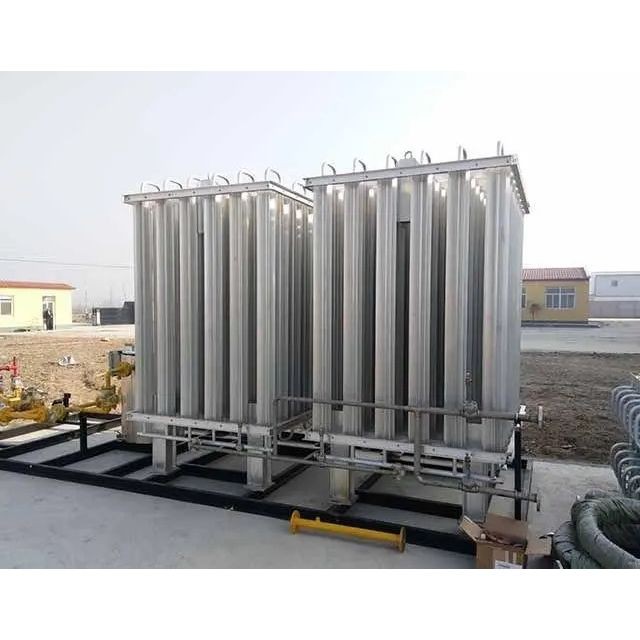

The outlet pressure, on the other hand, is the pressure at which the gas leaves the booster. This is often what you're aiming for to meet the requirements of your downstream systems. For instance, in some natural gas distribution systems, the outlet pressure might need to be maintained at around 2 - 5 MPa to ensure proper delivery to end - users.
3. Temperature
Temperature plays a significant role in the operation of a Tank Booster Pry. Gas compression generates heat, so it's essential to keep an eye on the temperature of the booster components.
Most Tank Booster Prays are designed to operate within a certain temperature range. If the temperature gets too high, it can lead to a decrease in efficiency and even cause damage to the seals and other internal parts. To manage the temperature, many boosters are equipped with cooling systems, such as water - cooled or air - cooled heat exchangers.
4. Power Consumption
Power consumption is an important consideration, especially if you're running the Tank Booster Pry for long periods. The power required to operate the booster depends on factors like the flow rate, pressure, and the type of compressor used.
Electric - driven boosters are common, and their power consumption is measured in kilowatts (kW). A more powerful booster with a higher flow rate and pressure will generally consume more power. When choosing a Tank Booster Pry, it's a good idea to look for models that are energy - efficient to save on operating costs in the long run.
5. Compressor Type
The type of compressor used in the Tank Booster Pry can have a big impact on its performance. There are several types of compressors, including reciprocating compressors, screw compressors, and centrifugal compressors.
Reciprocating compressors are known for their high - pressure capabilities and are often used in applications where high - pressure gas is required. Screw compressors, on the other hand, are more suitable for continuous operation and can provide a relatively stable flow rate. Centrifugal compressors are great for high - flow applications but might not be as effective at very high pressures.
6. Material of Construction
The materials used to build the Tank Booster Pry are also important. The components that come into contact with the gas need to be made of materials that are resistant to corrosion and can withstand the pressure and temperature conditions.
Common materials include stainless steel, carbon steel, and various alloys. Stainless steel is often used for its corrosion resistance, especially when dealing with gases that might contain moisture or other corrosive substances. Carbon steel is a more economical option for applications where corrosion is not a major concern.
7. Safety Features
Safety is always a top priority. A good Tank Booster Pry should be equipped with a range of safety features. These can include pressure relief valves, which are designed to release excess pressure in case of a malfunction. There should also be temperature sensors to monitor the temperature and shut down the booster if it gets too high.
In addition, many Tank Booster Prays have emergency stop buttons and interlocks to prevent unauthorized operation and to ensure the safety of the operators.
How Our Tank Booster Pry Stands Out
As a supplier, we take pride in offering Tank Booster Prays that meet the highest standards in terms of these technical parameters. Our products are designed to be reliable, efficient, and safe.
We use high - quality materials in the construction of our boosters, and our compressors are carefully selected to provide the best performance for different applications. Whether you need a booster for a small - scale project or a large - scale industrial operation, we've got you covered.
If you're also interested in related products, check out our CNG Pressure Relief Skid and LNG Bottle Group Gasification Skid. And of course, you can learn more about our Tank Booster Skid on our website.
Wanna Chat?
If you're in the market for a Tank Booster Pry, I'd love to have a chat with you. We can discuss your specific requirements, and I can help you choose the right model for your needs. Whether you have questions about the technical parameters or just want to get a quote, don't hesitate to reach out.
References
- Gas Compression Handbook
- Industrial Gas Equipment Standards and Guidelines


