

Hey there! As a supplier of CO2 vaporizers, I'm super excited to break down the working principle of these nifty devices. In this blog, we'll dig deep into how CO2 vaporizers operate, their components, and why they're so crucial in various industries.
The Basics of a CO2 Vaporizer
First off, let's understand what a CO2 vaporizer does. CO2, or carbon dioxide, is often stored in its liquid form because it takes up less space. But in many applications, you need CO2 in its gaseous state. That's where the CO2 vaporizer comes in. It transforms liquid CO2 into a gas, making it ready for use in things like beverage carbonation, industrial processes, and even in some medical applications.
Components of a CO2 Vaporizer
A CO2 vaporizer typically consists of a few key components. There's the inlet, where the liquid CO2 enters the vaporizer. Then, there's a heat exchanger. This is the heart of the operation. The heat exchanger is designed to transfer heat from an external source to the liquid CO2. The external source could be ambient air, electricity, or even steam, depending on the type of vaporizer.

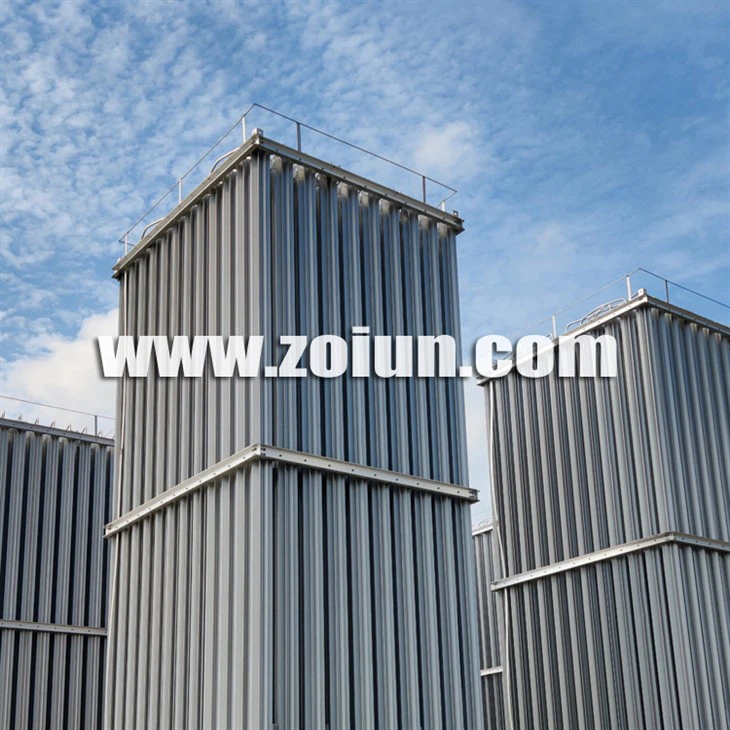
Next, we have the outlet. Once the liquid CO2 has absorbed enough heat and turned into a gas, it exits the vaporizer through the outlet and is ready to be used in the intended application. Some vaporizers also have safety features like pressure relief valves to prevent over - pressurization and ensure safe operation.
The Working Process
Now, let's get into the nitty - gritty of how a CO2 vaporizer works. When liquid CO2 enters the vaporizer through the inlet, it enters the heat exchanger. The heat exchanger has a large surface area to maximize the transfer of heat.
If it's an ambient air vaporizer, the cold liquid CO2 in the heat exchanger pipes comes into contact with the warmer ambient air. The heat from the air is transferred to the liquid CO2, causing it to start boiling. As it boils, the liquid CO2 changes its state from liquid to gas. This process is called vaporization.
In an electrically heated vaporizer, an electric heating element provides the heat. The electric current passing through the heating element generates heat, which is then transferred to the liquid CO2 in the heat exchanger. Similarly, in a steam - heated vaporizer, steam is used as the heat source. The steam passes through a separate set of pipes in the heat exchanger, and the heat is transferred to the liquid CO2.
As the CO2 vaporizes, the pressure inside the vaporizer increases. The pressure needs to be carefully regulated to ensure that the gas exits the vaporizer at the right pressure for the application. That's where the pressure control valves come in. These valves adjust the flow of the gas and maintain the desired pressure.
Types of CO2 Vaporizers
There are a few different types of CO2 vaporizers, each with its own advantages.
Ambient Air Vaporizers
Ambient air vaporizers are the most common type. They're simple, cost - effective, and environmentally friendly because they use the natural heat from the surrounding air. These vaporizers are great for applications where the demand for CO2 gas is relatively low and the ambient temperature is suitable. For example, in small beverage production facilities or some laboratory setups. You can check out our range of Cryogenic Ambient Air Vaporizers for more details.
Electric Vaporizers
Electric vaporizers are more suitable for applications where the ambient temperature is too low or where a precise control of the vaporization process is required. They can quickly heat up the liquid CO2 and provide a consistent supply of gas. These are often used in industrial processes where a stable gas supply is crucial.
Steam - Heated Vaporizers
Steam - heated vaporizers are used in large - scale industrial applications. They can handle high - volume demands for CO2 gas. Since steam can provide a large amount of heat, these vaporizers are efficient for big operations like large - scale food processing plants.
Applications of CO2 Vaporizers
CO2 vaporizers are used in a wide range of industries.
In the beverage industry, they're used to carbonate drinks. Liquid CO2 is vaporized and then injected into the beverage to give it that fizzy taste. Whether it's soda, beer, or sparkling water, CO2 vaporizers play a vital role in the production process.
In the food industry, CO2 gas is used for modified atmosphere packaging (MAP). It helps to extend the shelf life of food products by replacing the oxygen in the packaging with CO2. This slows down the growth of bacteria and other microorganisms.
In the medical field, CO2 is used in laparoscopic surgeries. Vaporized CO2 is used to inflate the abdominal cavity, providing more space for the surgeon to work. It's also used in some respiratory therapies.
Why Choose Our CO2 Vaporizers
As a supplier, we take pride in offering high - quality CO2 vaporizers. Our vaporizers are designed with the latest technology to ensure efficient and reliable operation. We understand that different industries have different requirements, so we offer a wide range of vaporizers to suit various applications.
Our ambient air vaporizers are made with high - quality materials that can withstand different environmental conditions. They have a large heat transfer surface area, which means they can vaporize CO2 quickly and efficiently. You can also explore our Nitrogen Vaporizer and LN2 Ambient Vaporizer if you have other gas vaporization needs.
We also provide excellent after - sales service. Our team of experts is always ready to help you with installation, maintenance, and troubleshooting. Whether you're a small business or a large industrial corporation, we can provide you with the right CO2 vaporizer solution.
Get in Touch
If you're in the market for a CO2 vaporizer or have any questions about our products, don't hesitate to reach out. We're here to help you find the perfect vaporizer for your needs. Whether you need a simple ambient air vaporizer for a small - scale application or a high - capacity steam - heated vaporizer for a large industrial process, we've got you covered. Contact us today to start a conversation about your CO2 vaporization requirements.
References
- Perry, R. H., & Green, D. W. (Eds.). (2007). Perry's Chemical Engineers' Handbook. McGraw - Hill.
- Incropera, F. P., & DeWitt, D. P. (2002). Fundamentals of Heat and Mass Transfer. John Wiley & Sons.


