

As a supplier of cryogenic vaporizers, I understand the importance of ensuring that our products meet the stringent requirements for use in explosion - proof areas. Cryogenic vaporizers are essential components in various industrial processes, used to convert liquefied gases such as liquid carbon dioxide (LCO2), liquid oxygen (LOx), and others into their gaseous states. However, when these vaporizers are intended for use in environments where there is a risk of explosion, several modifications are necessary to guarantee safety and compliance.
Understanding the Explosion - Proof Environment
Before delving into the modifications, it's crucial to understand the nature of explosion - proof areas. These areas are classified based on the likelihood of the presence of flammable substances in the air. The classification systems vary from country to country, but generally, they range from zones where explosive atmospheres are continuously present to zones where the presence is only occasional or under abnormal conditions.
In such areas, any equipment, including cryogenic vaporizers, must be designed to prevent the ignition of the flammable substances. This means that the vaporizer should not generate sparks, excessive heat, or other ignition sources during its normal operation or in case of a malfunction.
Electrical System Modifications
One of the most significant modifications for a cryogenic vaporizer to be used in an explosion - proof area is to the electrical system. Standard electrical components in a vaporizer, such as motors, controllers, and sensors, may produce sparks or overheat, which can ignite the flammable atmosphere.
Explosion - Proof Enclosures
All electrical components should be housed in explosion - proof enclosures. These enclosures are designed to contain any explosion that may occur inside them and prevent the flames or hot gases from escaping and igniting the surrounding atmosphere. The enclosures are typically made of robust materials such as cast iron or stainless steel and are sealed to prevent the ingress of flammable gases.
Intrinsically Safe Circuits
Intrinsically safe circuits are used for electrical components that cannot be housed in explosion - proof enclosures. These circuits are designed to limit the electrical energy to a level that is too low to ignite the flammable atmosphere. For example, sensors and control wires in the vaporizer may use intrinsically safe circuits to ensure that any electrical faults do not lead to an explosion.
Non - Sparking Electrical Components
Where possible, non - sparking electrical components should be used. For instance, brushless motors can be employed instead of brushed motors, as brushed motors can produce sparks during operation. Additionally, switches and relays should be designed to minimize the generation of sparks.
Material Selection
The choice of materials for the cryogenic vaporizer is also critical in explosion - proof areas. Some materials may react with the flammable substances in the atmosphere or generate static electricity, which can lead to ignition.
Non - Reactive Materials
The structural materials of the vaporizer should be non - reactive with the liquefied gases and the surrounding atmosphere. For example, stainless steel is a commonly used material for cryogenic vaporizers as it is resistant to corrosion and does not react with most liquefied gases. It also has good mechanical properties at low temperatures.
Anti - Static Materials
To prevent the build - up of static electricity, anti - static materials can be used for certain components. For example, the insulation materials used in the vaporizer should have anti - static properties. Additionally, grounding systems should be properly installed to dissipate any static charges that may accumulate during the operation of the vaporizer.
Ventilation and Gas Detection
Proper ventilation and gas detection systems are essential for cryogenic vaporizers in explosion - proof areas.
Ventilation
The vaporizer should be installed in an area with adequate ventilation to prevent the accumulation of flammable gases. Ventilation systems can be natural or mechanical. Natural ventilation relies on the movement of air through openings in the building, while mechanical ventilation uses fans to force the air out. The ventilation rate should be sufficient to keep the concentration of flammable gases below the lower explosive limit (LEL).
Gas Detection
Gas detection systems should be installed near the vaporizer to monitor the concentration of flammable gases in the air. These systems can detect the presence of gases such as LCO2 or LOx and trigger an alarm if the concentration exceeds a pre - set limit. In some cases, the gas detection system can also be linked to the vaporizer's control system to shut down the operation if necessary.
Thermal Management
Cryogenic vaporizers generate heat during the vaporization process. In an explosion - proof area, it's important to manage this heat to prevent the ignition of the flammable atmosphere.
Insulation
Proper insulation should be used to minimize the heat transfer from the vaporizer to the surrounding environment. High - quality insulation materials can reduce the surface temperature of the vaporizer, preventing it from reaching the ignition temperature of the flammable substances.

Heat Dissipation
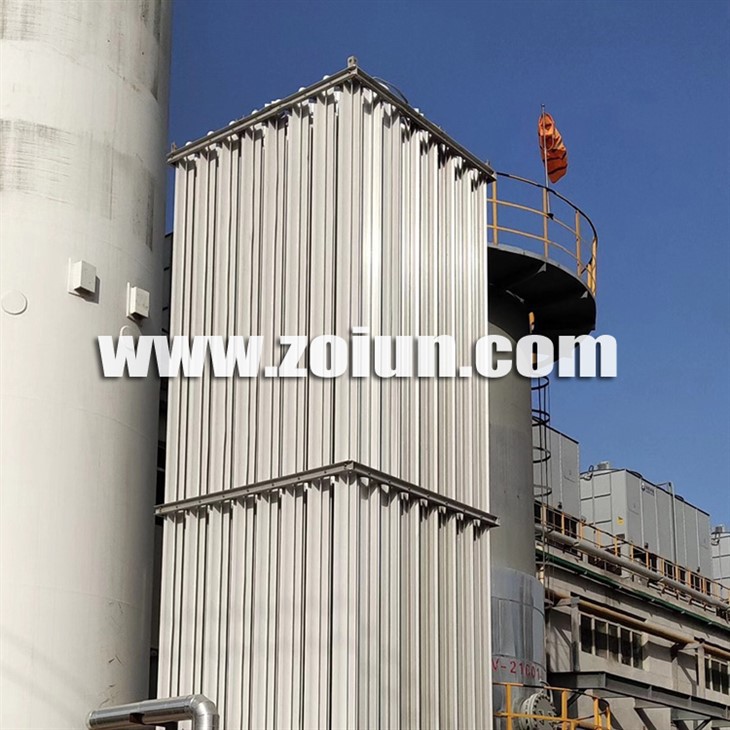
The heat generated by the vaporizer should be dissipated effectively. This can be achieved through the use of heat exchangers or cooling fins. The heat dissipation system should be designed to ensure that the temperature of the vaporizer and its surroundings remains within safe limits.
Compliance and Certification
When modifying a cryogenic vaporizer for use in an explosion - proof area, it's essential to ensure compliance with relevant standards and regulations. Different countries and industries may have specific requirements for explosion - proof equipment.
Standards and Regulations
Standards such as the International Electrotechnical Commission (IEC) standards for explosion - proof equipment provide guidelines on the design, construction, and testing of equipment for use in explosive atmospheres. In addition, local regulations may also need to be followed.
Certification
The modified cryogenic vaporizer should be tested and certified by a recognized testing laboratory. Certification ensures that the vaporizer meets the required safety standards and can be safely used in explosion - proof areas.
Examples of Modified Cryogenic Vaporizers
We offer a range of cryogenic vaporizers that can be modified for use in explosion - proof areas. For example, our LCO2 Ambient Vaporizer can be equipped with explosion - proof electrical components, anti - static materials, and proper ventilation and gas detection systems. Similarly, our Liquid Oxygen Vaporizer and LOx Ambient Vaporizer can be modified to meet the strict requirements of explosion - proof areas.
Conclusion
Modifying a cryogenic vaporizer for use in an explosion - proof area requires careful consideration of various factors, including the electrical system, material selection, ventilation, thermal management, and compliance with standards. As a cryogenic vaporizer supplier, we are committed to providing high - quality, safe, and compliant products for our customers in explosion - proof environments. If you are in need of a cryogenic vaporizer for an explosion - proof area, please contact us to discuss your specific requirements and explore the best solutions for your application.
References
- International Electrotechnical Commission (IEC) standards for explosion - proof equipment.
- Local regulations on explosion - proof equipment in different countries.
- Technical literature on cryogenic vaporizers and explosion - proof technology.


